Bihar Minister Vijay Sinha Claims Portfolio Swaps Linked to Anti-Corruption Drive
May, 27 2026
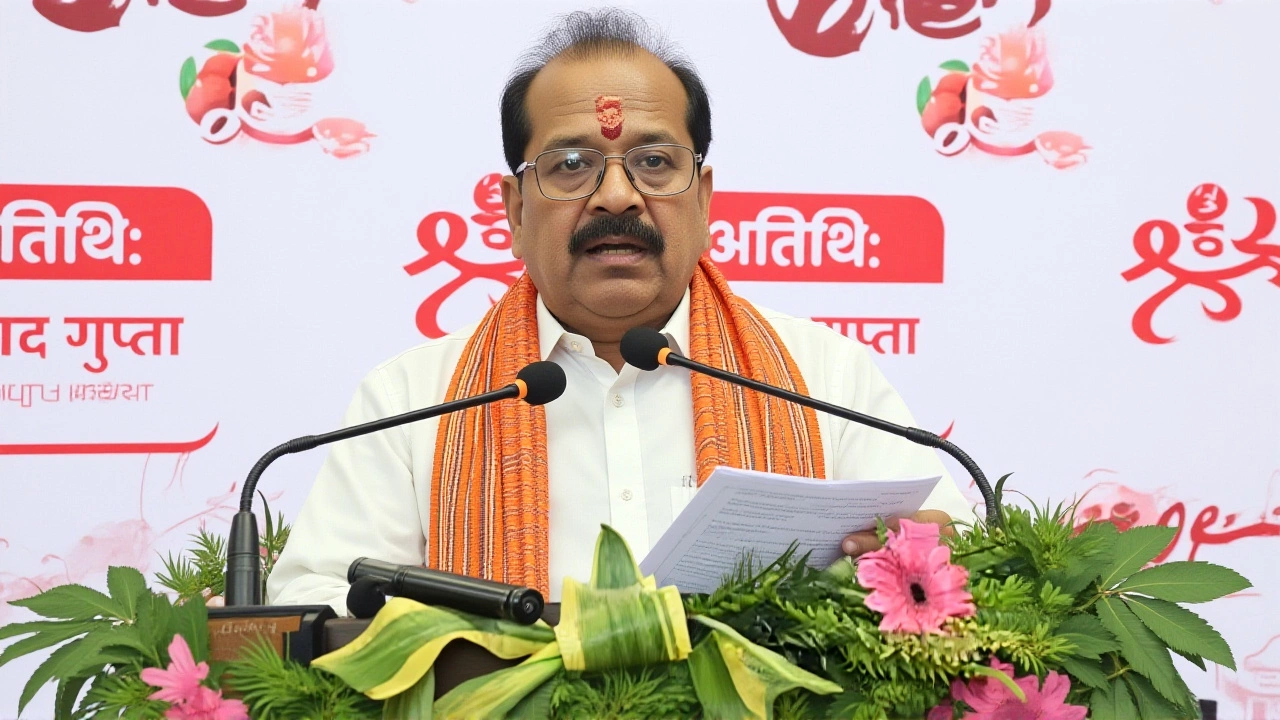
When Vijay Kumar Sinha, Agriculture Minister of the Government of Bihar, took the stage recently, he didn't just talk about crops. He dropped a bombshell that sent ripples through Patna's political corridors: his portfolio changes aren't random administrative shuffles—they're consequences of his anti-corruption crusade.
The statement came after Sinha was moved from the powerful Revenue and Land Reforms Department to the Agriculture Ministry during a recent cabinet reshuffle. It’s a move that has sparked intense speculation, with critics whispering about sidelining while supporters see it as evidence of his unwavering stance against graft.
The "Department Changes, Resolve Doesn't" Declaration
Here's the thing: in Indian politics, portfolio swaps are usually dry news. But Sinha turned it into a dramatic public declaration. Speaking at a public event, he made it clear that while his title might change, his mission remains fixed. "The department may change, but my resolve will not," he stated firmly.
His resolve centers on two critical issues for Bihar's population: protecting citizens' land rights and taking strict action against corrupt officials. This isn't just rhetorical flair; it's a direct response to the pattern many observers have noted in his career. Sinha alleges that every time he begins investigating irregularities or initiating strict enforcement actions within his ministry, his portfolio is swiftly reassigned.
"Whenever I start acting against any mischief or dishonesty, my department is changed," Sinha claimed. This assertion suggests a direct causal link between his anti-corruption efforts and the administrative decisions made by the state leadership. It paints a picture of a minister who views these transfers not as promotions or lateral moves, but as tactical maneuvers to halt his investigations.
From Powerhouse Portfolio to Agriculture
To understand the weight of this complaint, you have to look at what Sinha lost. Until recently, he held the reins of the Revenue and Land Reforms Department—a powerhouse portfolio often described as one of the most influential in the state government. This department handles land records, property disputes, and revenue collection, areas deeply entangled with local power structures and, unfortunately, corruption.
Sinha had been managing this sensitive beat alongside the Deputy Chief Minister. The transition to the Agriculture Ministry, while significant in its own right, is widely perceived by political analysts as a step down in immediate political leverage. Navbharat Times reported that social media buzzed with rumors that Sinha might be appointed Home Minister, a role that would have cemented his status as a top enforcer. Instead, the agriculture brief landed in his lap.
This discrepancy between expectation (Home Minister) and reality (Agriculture Minister), combined with the loss of the Revenue portfolio, has led some commentators to ask if Sinha is facing a "sideline vortex." The details of why the specific swap occurred remain officially unexplained, leaving room for these interpretations to flourish.
Political Fallout and Public Reaction
The reaction to Sinha's comments has been mixed. On YouTube, clips of his speech went viral under titles like "Vijay Sinha takes a dig" and "Painful statement on department change." These videos highlight the emotional undertone of his address, framing it as a grievance rather than a simple policy update.
Supporters view his stance as courageous. In a state where land mafia and bureaucratic corruption are persistent issues, having a minister willing to publicly link his removal to his integrity is rare. Opponents, however, might argue that cabinet reshuffles are routine parts of governance, designed to balance workloads and political equations, not necessarily punishments for whistleblowers.
But wait—there's another layer. By making this public, Sinha forces the administration's hand. He can no longer be quietly shuffled without explanation. The narrative is now set: any future move involving him will be scrutinized through the lens of whether it's an attempt to silence his anti-corruption drive.

What This Means for Bihar's Governance
If Sinha's allegations hold true, it points to a deeper structural issue within the state's bureaucracy. It suggests that anti-corruption measures are being neutralized through administrative maneuvering rather than addressed legally. For the common citizen in Bihar, whose livelihood often depends on secure land titles and fair revenue practices, this is concerning.
The broader impact extends beyond Sinha. It sets a precedent. If other ministers believe that aggressive enforcement leads to demotion, the entire apparatus of accountability could weaken. Conversely, if his public stand boosts his political capital and forces a review of his cases, it could embolden others to follow suit.
Experts suggest watching the next few months closely. Will new investigations emerge from the Agriculture Ministry? Will there be further cabinet changes? Or will the current administration respond with transparency to dispel the rumors? The answer will define the tone of Bihar's political landscape for the remainder of the term.
Frequently Asked Questions
Why did Vijay Kumar Sinha claim his department was changed?
Sinha alleged that his portfolio was swapped from the powerful Revenue and Land Reforms Department to Agriculture specifically because he began taking strict action against corruption and irregularities within his previous ministry. He claims this is a recurring pattern whenever he initiates such crackdowns.
What was Vijay Kumar Sinha's previous position?
Before becoming the Agriculture Minister, Sinha headed the Revenue and Land Reforms Department. This portfolio is considered highly influential in Bihar due to its control over land records, property rights, and state revenue, often placing its head at the center of political and administrative power.
Is there official confirmation that his transfer was punitive?
No, there is no official statement from the Bihar government confirming that the transfer was a punishment for his anti-corruption efforts. The government typically cites administrative needs and workload balancing for cabinet reshuffles. Sinha's claims remain his personal interpretation of the events.
How has the public reacted to his statement?
The reaction has been significant on social media and digital news platforms. Videos of his speech have gone viral, with many viewers interpreting his words as a bold stand against political pressure. Supporters praise his courage, while skeptics view it as political posturing following a less-than-expected portfolio assignment.
What does this mean for land rights in Bihar?
If Sinha's allegations are accurate, it raises concerns about the stability of anti-corruption initiatives in the land sector. Secure land rights are crucial for farmers and investors. A perception that enforcing laws leads to ministerial removal could potentially slow down reforms aimed at protecting citizens' property rights.